
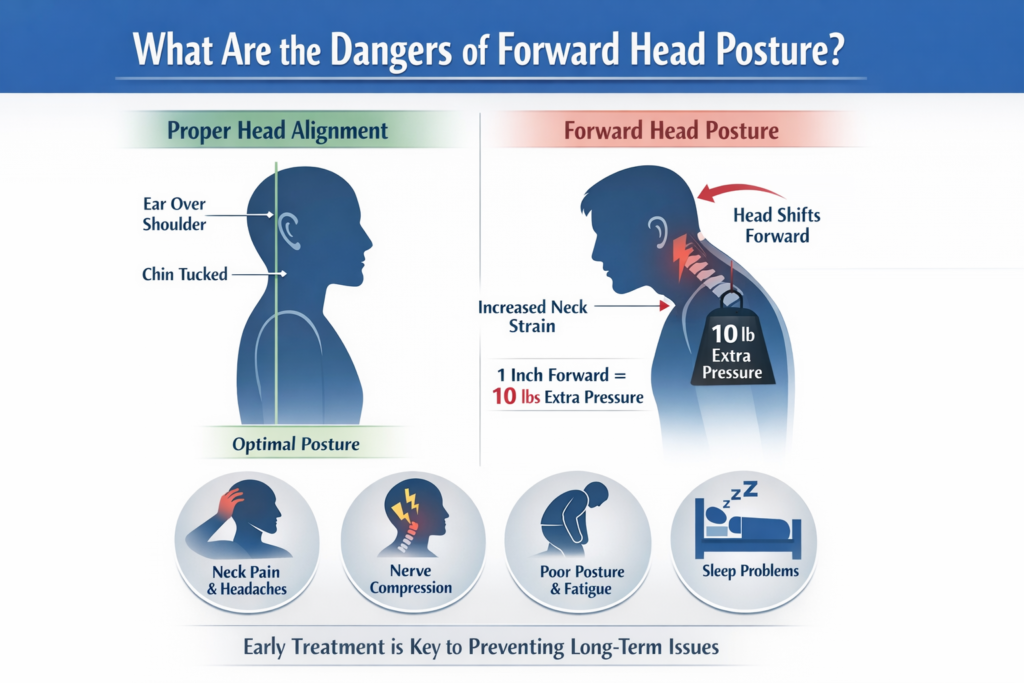
Forward head posture, also known as anterior head carriage, occurs when the head shifts forward from its optimal position. Ideally, when viewed from the side, the ear should line up with the outermost part of the shoulder and the chin should be gently tucked. When the head drifts forward from this alignment, it places extra stress on the neck, upper back, shoulders, and supporting muscles and ligaments.
Forward head posture is the most common postural imbalance seen during chiropractic postural evaluations at South Metro Wellness Clinic. Dr. Christine Rankin, DC, has observed this pattern throughout her career, including as early as 2010 when she worked as an intern in a busy family chiropractic clinic. At that time, posture was often described as the “window to the spine,” because trained chiropractors could frequently predict a patient’s musculoskeletal complaints simply by observing their posture.
In the past, forward head posture was most commonly seen in teenagers and young adults, often related to studying, prolonged reading, and carrying heavy backpacks. Today, this same postural imbalance is appearing at younger ages and to a more noticeable degree. Increased use of computers, tablets, and cell phones has caused many children, teens, and adults in Burnsville and nearby communities to spend more time with their heads tilted forward, placing ongoing strain on the neck and upper spine.
Like many developing skeletal and postural problems, forward head posture usually begins gradually and may not cause noticeable symptoms at first. Over time, however, the imbalance becomes more established. By the time many patients come into the office with headaches or neck pain that seem to appear “out of nowhere,” their head may already be positioned one to two and a half inches forward from its original alignment.
This forward shift has a significant physical impact. For every inch the head moves forward, the lower cervical spine experiences an additional ten pounds of pressure. This added load forces the postural muscles and ligaments to work harder to support the head. As these tissues become fatigued and strained, patients may begin to experience dull, achy neck pain, stiffness, painful or limited range of motion, frequent headaches, and in some cases sharp pain related to nerve irritation or compression.
When forward head posture becomes chronic, these symptoms often do not resolve on their own. Medications may temporarily reduce pain, but they do not correct the underlying postural imbalance. Chiropractic care focused on postural correction, spinal alignment, stretching, and therapeutic or postural exercises is often necessary to help restore healthier cervical spine mechanics.
Your chiropractor will perform a thorough examination of your spine and posture and explain how forward head posture may be contributing to your symptoms. A personalized care plan is then created to address your specific needs and goals. It is important to remember that it can take months or even years for postural damage to develop, so meaningful rehabilitation does not happen overnight. Consistent care and active participation in your recovery are key to long-term improvement.
Your health is one of your most valuable assets. Improving posture and spinal health is an investment in your comfort, function, and long-term well-being.
If you live in Burnsville, Apple Valley, Eagan, Savage, Lakeville, Bloomington, or nearby areas and are experiencing neck pain, headaches, or posture-related issues, call South Metro Wellness Clinic to schedule an evaluation and consultation with Dr. Christine Rankin, DC, at 952-892-5006. A postural evaluation can help you understand what’s happening and take the next steps toward better spinal health.
 Español de México
  English